How does William Butler Yeats highlight confusion and chaos in a changing world through his poem ‘The Second Coming’ ?
Yeats’, ‘The Second Coming’ (1920), is a very powerful yet obscure poem about a rapidly changing world, altered by violence, chaos, confusion and seems to be spiralling out of control. As it was written following World War I, a historic event that affected the lives of many, the poem reveals a picture of a desolate world in which progression and order may merely be an illusion.
Instantly in the first line, Yeats mentions a “widening gyre” (Yeats, line 1), alluding to his view that the world was created by a series of circles, spinning into each other to catalyse existence. This evokes a sense of mystery through its ominous nature and how the world is continuously “turning and turning” (Yeats, line 1) in this gyre. Through, “The falcon cannot hear the falconer” (Yeats, line 2), he highlights a sense of disconnection, utilising the metaphor to capture how humans have separated from their moral compass, ethics or God. Now, the world is spiralling into chaos, an uncontrollable chaos. However, it is still quite ambiguous and there are many interpretations. One may say that there is a loss of order or perhaps the falcon may have broken free from the past and is discovering new possibilities in the world. The brokenness of the world is further exemplified through “the centre cannot hold” (Yeats, line 3), highlighting how the core of the world is falling apart. Yeats repeatedly uses the word “loosed” to describe the numerous changes occurring and how they have undone society. Anarchy, fury and chaos has been unleashed into the world and a collapse is inevitable but what will this collapse lead to? A new coming? Something dangerous or liberating? That is simply unknown.
The poem then delves into mythological imagery. Yeats mentions “Spiritus Mundi” (Yeats, line 12), a latin term meaning “World Spirit”. He alludes to this to underscore how the universe contains memories of all time. A ‘collective unconscious’ is common to all humans, responsible for their beliefs and the images that exist in the world. I know, this all sounds very confusing but the confusion does not end there! It is heightened through Yeats utilising dark imagery as he refers to a mythical creature with “a.. lion body and the head of a man” (Yeats, line 14). This picture of the “rough beast” (Yeats, line 21) resembles the Sphinx, brought to his mind by Spiritus Mundi and causes the poem to end as ominous and obscure as it began. Why does it slouch towards Bethlehem? Will it result in the birth of pure chaos? Although the war had ended, the war of mankind against self-destruction was and still is far from over. If anything, it was only highlighted through the conflict of war! Although the world is spinning and changing, the fate of it is simply undecided. However, from Yeats’ vision, embedded within the poem, there appears to be a sense of hopelessness for the preservation of mankind.
Poem: https://www.poetryfoundation.org/poems/43290/the-second-coming
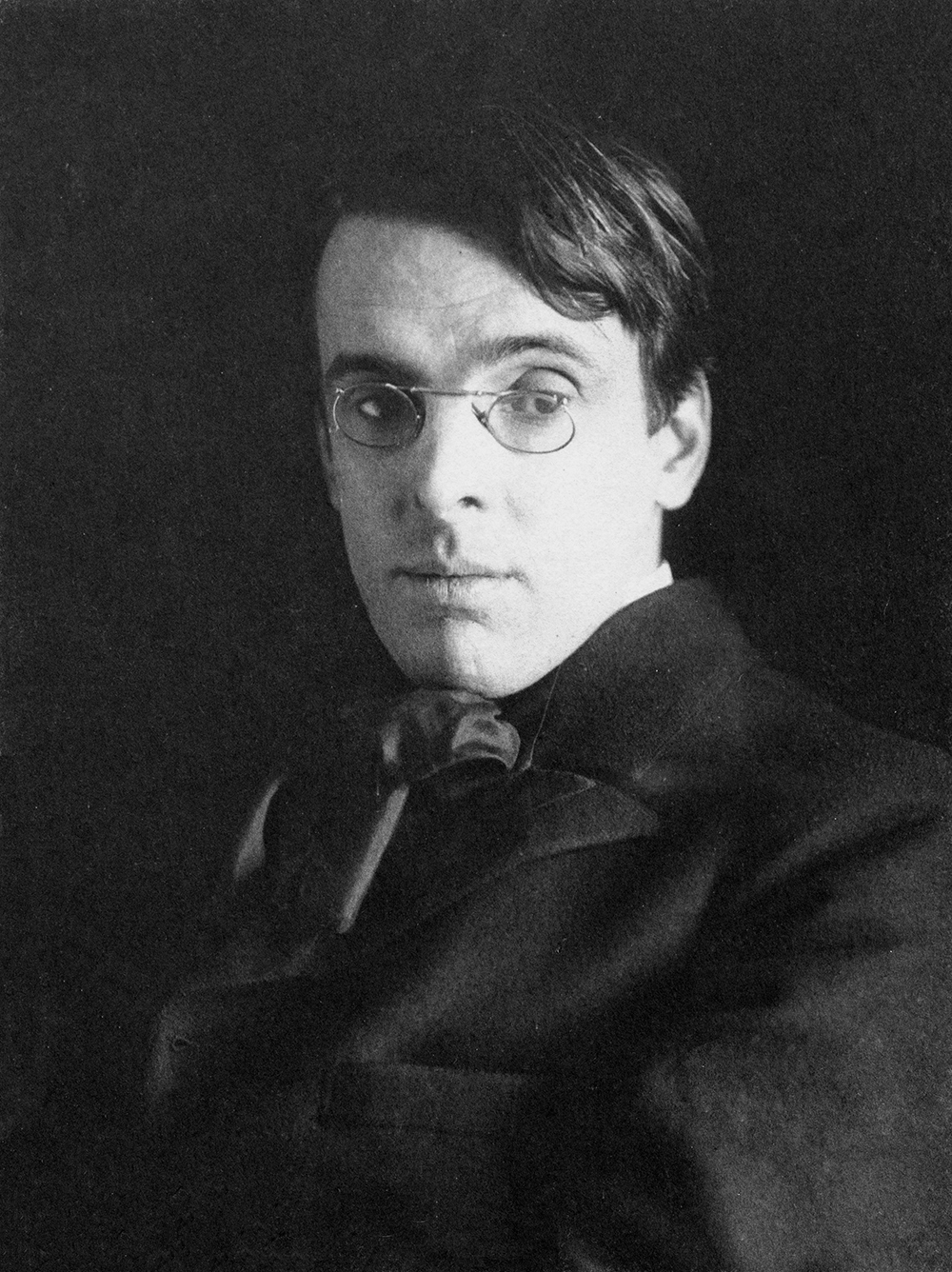
Yeats photographed in 1903 by Alice Boughton. Image retrieved from: https://en.wikipedia.org/wiki/W._B._Yeats#/media/File:Yeats_Boughton.jpg


 Holly’s Blog

Hi Holly,
Your analysis of Yeats’ ‘The Second Coming’ was very interesting and well written. It definitely responded well to the set question and highlighted the sense of chaos and confusion throughout his poem. I especially liked how you included some historical context to when Yeats composed the poem, as it set the foundation for understanding what catalysed such chaotic connotations throughout his writing. I felt the inclusion of rhetorical questions was a great way to engage readers in your rich analysis and keep them anticipated for what you would propose next. Overall, you have responded to Yeats’ poem very well and written a great response!
LikeLike