
All individuals are welcomed and encouraged to involve themselves in positive learning experiences that strengthens their sense of self’ and perception of the world around (Universal Declaration of Human Rights [UDHR], 1948). It is crucial, as an educator, that I uphold a safe and supportive learning environment. This includes embracing diversity, recognising the non-linear process of learning and encouraging all students’ active participation so that they feel comfortable in the learning space. Educators cannot simply ‘transmit’ knowledge as this does not catalyse active development (Bada & Olusegun, 2015). However, students must be provided with assistance in order to develop, academically and social-emotionally , through maintaining a firm rapport and perceiving myself as a ‘guide’ rather than a dominating, instructive figure. Adoption of a constructivist approach, with particular reference to Vygotsky (1978), would ensure students are the primary focus, engaged in activities such as discussions, debates and inquiry tasks that require them to be actively involved.

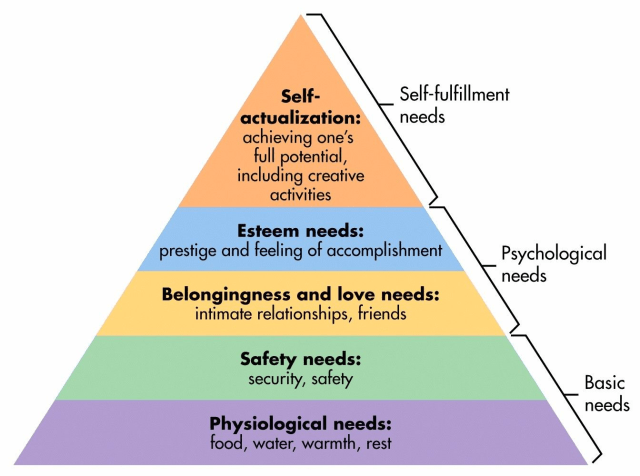
Additionally, a humanist approach involves taking into consideration students’ context including their physical wellbeing, social, emotional and academic backgrounds in order to understand how they shape their behaviour and attitude towards learning (Maslow, 1943). I am to develop a rapport with students, knowing ‘how they learn’ and that which may affect their ability to process information or develop strong connections with peers. Students must also be prompted to grow as an individual and learner. Challenging them, within reason, may encourage them to think deeply and remain curious, aspects which are necessary to limit stagnation. Ultimately, all students are unique and must be seen, heard and appreciated within the learning environment.
 Holly’s Blog