Data refers to collecting information concerning students’ engagement in learning activities in order to assess student knowledge/skills and inform future teaching practices. It can be retrieved from a plethora of sources in order to understand each student’s position in the learning cycle and identify a focus for the educators’ professional development (Scanlon et al., 2003). AITSL standards included through the collection and interpretation of data to inform teaching include: 5.1, 5.2, 5.3. 5.4 and 5.5 (2017) whereby the educator is able to assess, provide feedback and report on student learning in order to improve/scaffold teaching practices. I endeavour to provide timely and consistent feedback in both verbal and written forms in order to continually provide students with opportunities to reflect upon their work and understanding, informing future learning. I will provide opportunities for students to complete work utilising paper and ICT whereby they are able submit responses in the form of google forms, drop-boxes on google classroom in order to ensure that all students are able to involve themselves in learning and for the collection of data to occur in various forms. I will ensure that assessments are reliable and valid, a reflection of the work students are completing, will reflect authentic understanding and have evidence that is able to be critically analysed to inform practice. For example, data can be collected through homework logs, padlet brainstorms, completion of worksheets, collaborative google slides creation, spelling tests and exit slips in order to understand what students have learnt and the skills they have developed throughout the term rather than at its conclusion.
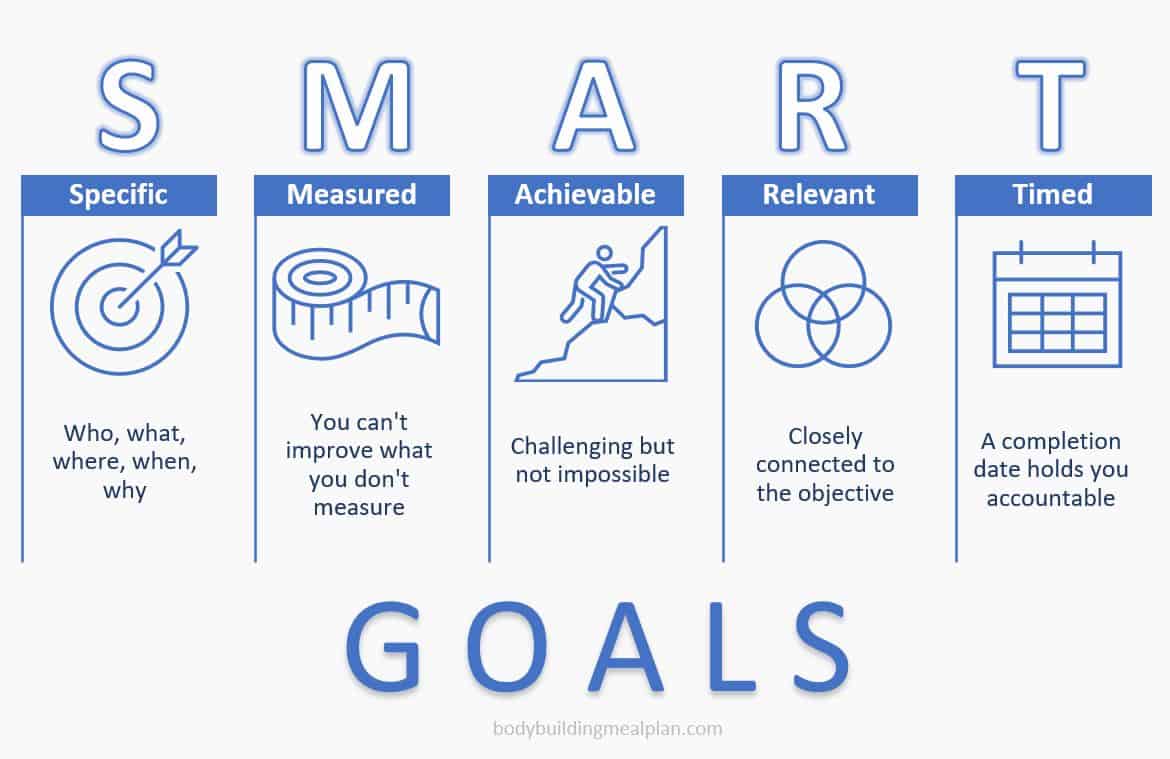
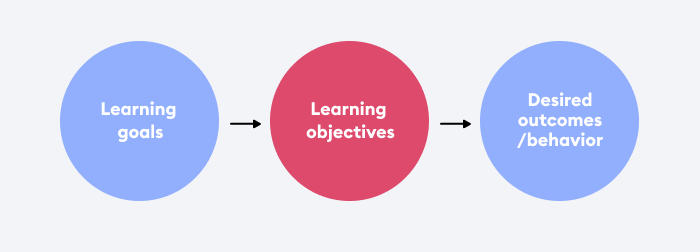
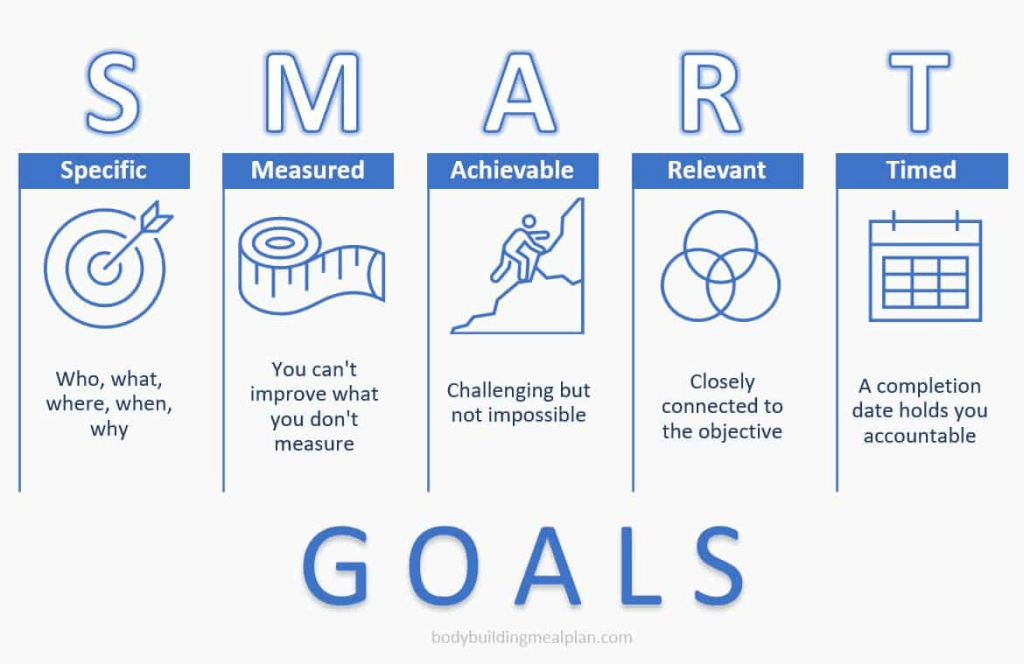
Clear learning goals provide clarity concerning lesson expectations, thereby ‘demystifying’ education (Cabaniss, 2008). Thus, providing clear, achievable goals are of paramount importance and is characterised by utilising explicit instructions, providing demonstrations to a class through tactile approaches, linking lessons to prior knowledge i.e. asking questions to acknowledge what students completed in the previous lessons, ensure classroom management is maintained, reinforce learning through providing feedback to consolidate learning, articulating objectives and aims, understanding current skills in order to introduce and consolidate new skills, ensuring intentions are specific, observable, achievable, clear and use age appropriate language. This enables students to get ready for learning and can be achieved through reflecting learning intentions and success criteria. Moreover, writing down lesson intentions on the whiteboard in various colours and including time allocations aided in providing clear instruction to students and ease students through the lesson, particularly those with anxiety (AITSL, 2017, 1.2, 1.3, 1.5 and 1.6). In order to support learning goals and establish a clear learning sequence I can implement an introductory activity in a year 7 lesson as students have embarked in the study of drama. Before engaging within in-depth study of elements of drama, students have completed a glossary and are thus operating utilising prior knowledge. This lesson can be focused on developing their understanding and thus an introduction can be utilising a picture association and have students discuss/ draw on the whiteboard around the image what is happening in each image i.e. costumes, props, lighting, music, stage, script etc. Students are thus able to engage in the development i.e. writing their own diary entry having a more informed understanding of the key elements and why they are important or represented visually to assist learners. The AITSL standards 1.2, 2.2, 3.1, 3.2, 3.3, 3.4, 3.5, 5.1, 5.2, 5.4 and 6.2 (2017) ensure students’ understanding is ascertained and that subsequent lessons are scaffolded to continue meaningful learning.
Assessment is multifaceted, able to assess student understanding regarding content examined, the development of critical skills and interpret student data to understand the trajectory of learning and how this can be altered to cater for learners. (Harlen, 2006). Diagnostic assessment ‘as’ and ‘for’ learning determines students’ pre-existing understanding or level of knowledge and thereby enables teaching practices to be adjusted accordingly through understanding students and how they learn (AITSL, 1.1, 1.2, 2017). Formative assessment for’ learning’ occurs through students’ completion of informal and formal tasks and is provided with feedback concerning their achievements and progress in the learning cycle (Ramaprasad, 1983), a contrast to summative which is an evaluation of student learning at the conclusion of a lesson or course.
Formative assessment ‘for’ learning is crucial and useful when it is frequent, linked to real-world contexts and shapes subsequent learning experiences (Black and William, 1998). Meaningful learning is when students are able to move beyond memorisation to a deeper understanding of the issues and content. Thus, formative assessments in the form of think-pair-share, class discussions, debates, jig-saw tasks, PEEL paragraphs, multimodal presentations are some forms of formative assessments that promote student engagement, providing ample opportunity for students to demonstrate their understanding in differing contexts. I believe that I should maintain a ‘constructive alignment’ design when implementing formative assessment as according to Biggs, “it is intended that students should learn and how they should express their learning is clearly stated before teaching takes place. Teaching is then designed to engage students in learning activities that optimise their chances of achieving those outcomes, and assessment tasks are designed to enable clear judgments as to how well those outcomes have been attained” (2001, pp. 5-6). Thus, through this, the reliability and effectiveness of the learning experience can be obtained. I can therefore utilise feedback i.e. exit slips more effectively within my professional development in order to scaffold lessons i.e. if collaborative group tasks did not ensure that students were all working in their groups, allocating students a role and monitoring their progression through observation may be effective in order to hold all learners accountable but consideration of differentiation for diverse learners is important.
Surface learning is characterised by learners’ meeting minimum learning requirements through engaging in practice with minimal effort. This therefore disregards analysis and integration, leading to lack of engagement with learning outcomes. Contrastingly, deep approaches enable students to understand content, actively integrate new information in their learning, develop analytical skills, and are task-centred and appropriate (Gordon & Debus, 2002). It is pivotal to act as the facilitator who structures lessons that deepens learning through providing variations in questioning in order to facilitate such a process (Hattie & Jaeger, 1998). Particularly, questioning allows students to think deeply, developing higher-order thinking skills which leads to cognitive development and deep learning. Thus, establishing effective questioning techniques is integral in order to “stimulate learning, develop the potential of students to think, drive to clear ideas, stir the imagination…it is also one of the ways teachers help students develop their knowledge more effectively” (Shanmugavelu et al., 2020).
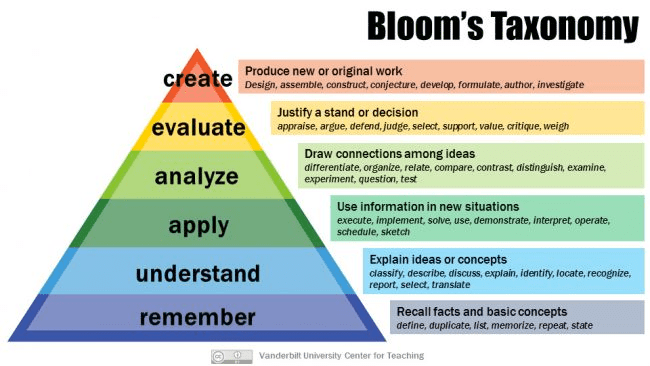
I believe that the DeBono Six Thinking Hats activity is a crucial way to develop effective questioning skills in order to stimulate deep learning. It maximises collaboration, considers the multifaceted nature of teaching/learning, uses parallel thinking, reduces conflict, stimulates innovation, views issues from multiple angles and makes thorough evaluations (DeBono, 2019). It helps Identify where each student is as a class and individual and thereby helps teaching align with learning outcomes. Socratic question techniques that develop from clarification towards probing assumptions, evidence and perspectives, asking expansive questions that simulates higher order and deep thinking. Enabling students to understand the multifaceted nature of answers and develop critical and creative thinking (Gose, 2009). Ultimately, ensuring questions develop in difficulty, for example, from recall i.e. ‘What is a prop?’ to ‘Evaluate the usefulness of props in Ancient Greek theatre’ ensures students move from lower order to higher order thinking, shifting from ‘remembering’ in Bloom’s Taxonomy (2001) to assessing and analysing. Thus, the AITSL Standards 1.2, 1.5, 2.1, 2.3, 3.3, 3.5, 4.1, 5.1, 5.2 (2017) are recognised in order to understand that students will respond in different ways to questioning, thus maintaining a rapport is crucial in order to strengthen their willingness to participate and understand differentiation.
Gordon, C., & Debus, R. (2002). Developing deep learning approaches and personal teaching efficacy within a preservice teacher education context. British Journal of Educational Psychology, 72(4), 483-511.
Gose, M. (2009). When Socratic dialogue is flagging: Questions and strategies for engaging students. College Teaching, 57(1), 45-50
Hattie, J., & Jaeger, R. (1998). Assessment and classroom learning: A deductive approach. Assessment in Education: principles, policy & practice, 5(1), 111-122.
Shanmugavelu, G., Ariffin, K., Vadivelu, M., Mahayudin, Z., & Sundaram, M. A. R. (2020). Questioning Techniques and Teachers’ Role in the Classroom. Shanlax International Journal of Education, 8(4), 45-49.
The use of Information Communication Technology (ICT) in both the teaching and learning cycle has become influential, integrated within pedagogical paradigms to support accessibility and engagement (Churchill et al., 2013). It has maintained the power to guide engagement, catalyse interest in content, develop interpersonal/intrapersonal skills and differentiate activities to suit diverse learners (Roach, 2014). The successful integration of ICT within educational context, however, is largely dependent on the educators ability to incorporate it meaningfully (UNESCO, 2008) and thus consideration of AITSL Standards 1.3, 1.5, 3.4, 4.1, 4.5, 5.1, 5.2 and 5.4 (2017) prior to facilitating learning through the use of ICT proved to be critical in transforming learning for students.
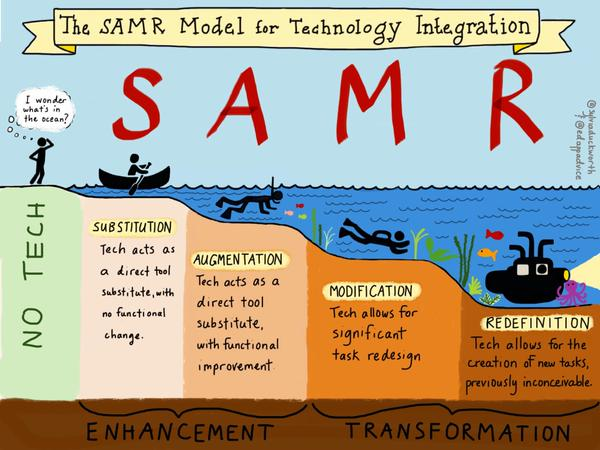
Within my Year 9 English lesson, I utilised the interactive platform ‘padlet’ in order to support my teaching practice and promote student engagement (Mehta et al., 2021). Reflection upon these standards and consideration of the benefits of a constructivist approach ensured that students would be actively involved in ‘constructing’ knowledge in a new dimension (Vygotsky, 1978). It was thus used as a means of ‘augmentation’ as illuminated through the SAMR model, acting as a direct substitute which provided improvement to student learning (Romrell et al., 2014). Padlet was used effectively as students composed a book review concerning their set novel study, commented on peers’ reviews to provide feedback and ultimately engaged in practices that align with Vygotsky’s Constructivist theory and the intentions of the SAMR model. It is integral for students to share their insights, demonstrate active thinking, examine various viewpoints and ‘expose’ them to review as this results in the development of higher order thinking and strengthens students’ sense of self-efficacy (Jones, 2008, Bada & Olusegun, 2015, Maslow, 1943). Padlet provided an anonymous, alternate form of learning for students to ‘voice’ their opinions, critical for students in my class with anxiety disorders as they were actively engaged in the activity (Pollock, 2016, McDowell et al., 2019). Moreover, Fuchs (2014) asserts that students may be reluctant to share opinions as they fear speaking in public environments and may perceive their opinions not to be well-informed. Thereby, ‘padlet’ was used in this context in order to develop student engagement and self-esteem prior to engaging in future collaborative in-person tasks. Rather than students providing feedback orally to peers, responding in the form of a ‘comment’ decreased time spent on this section of the lesson and enabled students to focus their attention on the consolidation of understanding (Fisher, 2017). Additionally, such peer interactions aid in the development of interpersonal skills, necessary for students to communicate effectively in written form, feel involved in the learning environment and build their confidence (Romrell et al., 2014).
Upon collection of student data, I recognised that whilst many students engaged well with expressing their opinions through their reviews, not all students were involved in the activity. This may have stemmed from the lack of access to devices i.e. students had to share and take turns posting or write their reviews in their books in order to post at a later time (AITSL, 2017, 1.3), some students lack of familiarity with the novel due to it being a mixed-ability classroom, lack of interest in the novel or continual fear of having their work posted on an online platform despite it being anonymous (Churchill et al., 2013). Moreover, most students did not provide constructive feedback to peers, gave a simple one-word positive comment and used the activity as a means to communicate with peers ‘socially’. Thus, clarification on the ethical use of ICT, discussion regarding the importance of providing appropriate feedback, assigning student names to comments in order to hold students accountable (Ford, 1994) and monitoring/projecting students answers and comments frequently could have aided in upholding AITSL standards 2.6 and 4.5 (2017).
Students’ responses on padlet
Ultimately, ICT was implemented in order for students to practice expressing their opinions and providing feedback to peers. With particular reference to standards 2.6, 3.4 and 4.5, educators are called to consider how ICT can enhance students’ engagement with curriculum content, act as a means of differentiation and be utilised effectively through maintaining ‘duty of care’ (AITSL, 2017). I believe that I can strengthen my ability to uphold these standards in future practice through clarifying the use of ICT as an educational tool and providing explicit instruction to inform learning.
Bada, S. O., & Olusegun, S. (2015). Constructivism learning theory: A paradigm for teaching and learning. Journal of Research & Method in Education, 5(6), 66-70. DOI: 10.9790/7388-05616670
Churchill, S., Godinho, S., Johnson, N. F.; Keddie, A., Letts, W.; Lowe, K.; Mackay, J.; McGill, M.; Moss, J.; Nagel, M.; Shaw, K.; Vick, M. (2013). Teaching: Making a difference (3rd ed.). John Wiley & Sons.
Fisher, C. (2007). Padlet: An Online Tool for Learner Engagement and Collaboration. Academy of Management Learning & Education, 16(1). https://doi.org/10.5465/amle.2017.0055
Ford, E. E. (1994). Discipline for home and school: Teaching children to respect the rights of others through responsible thinking based on perceptual control theory. Brandt Publications.
Jones, R. C. (2008). The “why” of class participation: A question worth asking. College Teaching, 56(1), 59-63. http://www.tandfonline.com/loi/ vcol20#.U2PoEFdcw60
Maslow, A. H. (1943). A theory of human motivation. Psychological Review, 50(4), 370-96.
Mehta, K. J., Miletich, I., & Detyna, M. (2021). Content-specific differences in Padlet perception for collaborative learning amongst undergraduate students. Research in Learning Technology, 29. https://doi.org/10.25304/rlt.v29.2551
McDowell, A., Cutting, D., Sage, P., Allen, A., & McGowan, A. (2019). Backchannel in large learner cohorts – does anonymity matter? A comparative study. Education and Information Systems, Technologies and Applications. Orlando, United States.
Roach, T. (2014). Student perceptions toward flipped learning: New methods to increase interaction and active learning in economics. International Review of Economics Education, 17, 74-84. https://doi.org/https://doi.org/10.1016/j.iree.2014.08.003
Romrell, D., Kidder, L., & Wood, E. (2014). The SAMR model as a framework for evaluating mLearning. Online Learning Journal, 18(2). https://www.learntechlib.org/p/183753/.
Collaboration contributes to meaningful learning experiences as it involves the division of responsibility amongst students in order to achieve an intended outcome as well as develop valuable interpersonal and intrapersonal skills (Churchill et al., 2013, Victoria State Government, 2021). Group work is a critical pedagogical technique that assists in strengthening the “community of learners” in the classroom (Mintrop, 2004, p.142). Thus, collaborative learning is a useful tool to simultaneously engage with curriculum content and develop student skills. The AITSL standards considered through its implementation include 1.1, 4.1, 4.2 and 5.1 as students participation is encouraged in an inclusive environment, critical and creative thinking is developed and students are assessed informally in order to appreciate the effectiveness of the strategy (2017).
The teaching strategy, collaborative learning, was implemented in my Year 9 English lesson. Students engaged in a jig-saw group activity in order to become an ‘expert’ on their allocated genre of Greek play before sharing/discussing their findings in smaller groups (Churchill et al., 2013). This task, as a whole, enabled students to develop their contextual understanding before delving into in-depth study within the unit.
Vecteezy. (2022).Teamwork, four stickmen businessmen holding connected team jigsaw puzzle pieces, hand drawn outline cartoon vector illustration.
This was an effective strategy as it involved students developing “interpersonal and small group skills (including leadership, decision making, trust building, communication and management), and group processing” (Kardaleska, 2013, p.55), necessary in order to increase their self-esteem and ability to exude control in student-centred learning environments (Churchill et al., 2013). Through observation, I recognised that students worked well due to being given creative freedom to create their google slides, a fundamental aspect that underpins the Constructivist theory (Vygotsky, 1978). Moreover, whole class presentations work on the mindset that all learners are capable of demonstrating their understanding entirely in a singular form, adopting a ‘one size fits all’ approach (Sizer, 2004). Thus, the effectiveness of this collaborative strategy was illuminated through students working in mixed-ability groups, presenting to their peers in the form of an informal ‘discussion’ rather than a whole group ‘presentation’. I found that this enabled all groups to share their presentations without time being a restriction and catered for students with diverse needs as they were able to reap the benefits of collaborative learning without being overwhelmed by presenting in front of a large group (AITSL, 2017, 1.2, 1.5 and 1.6).
EXAMPLES OF STUDENT WORK
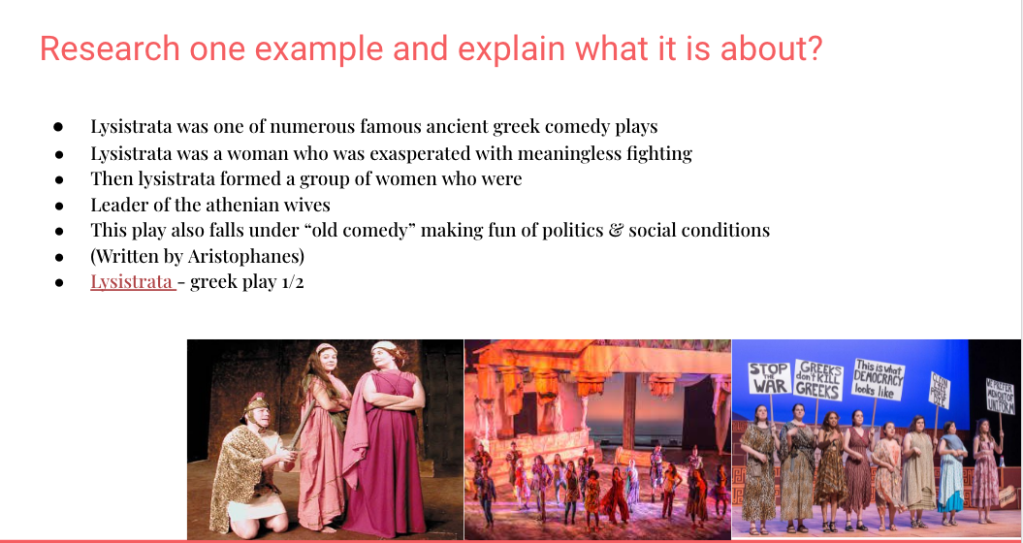
Group 1 – Comedies
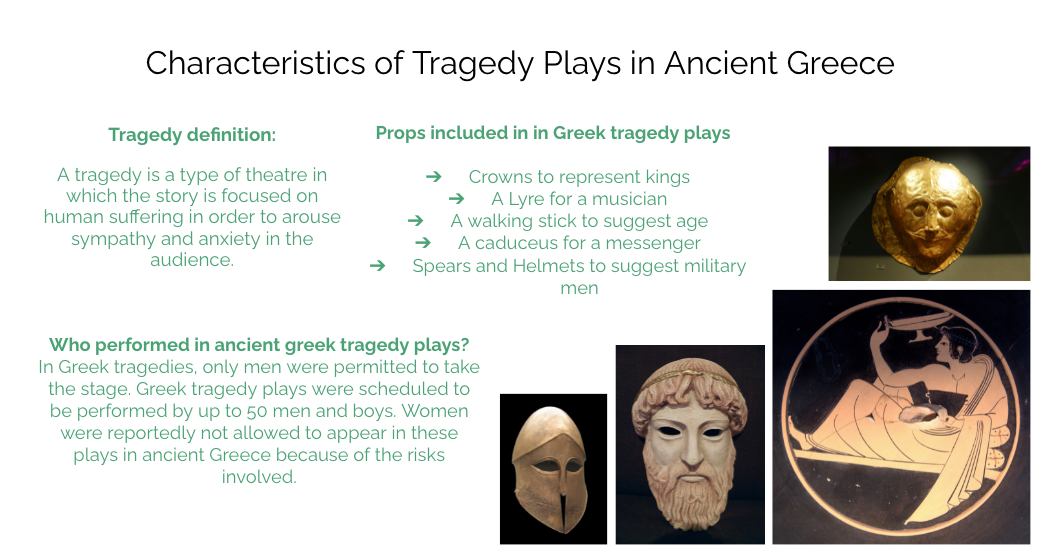
Group 2 – Tragedies
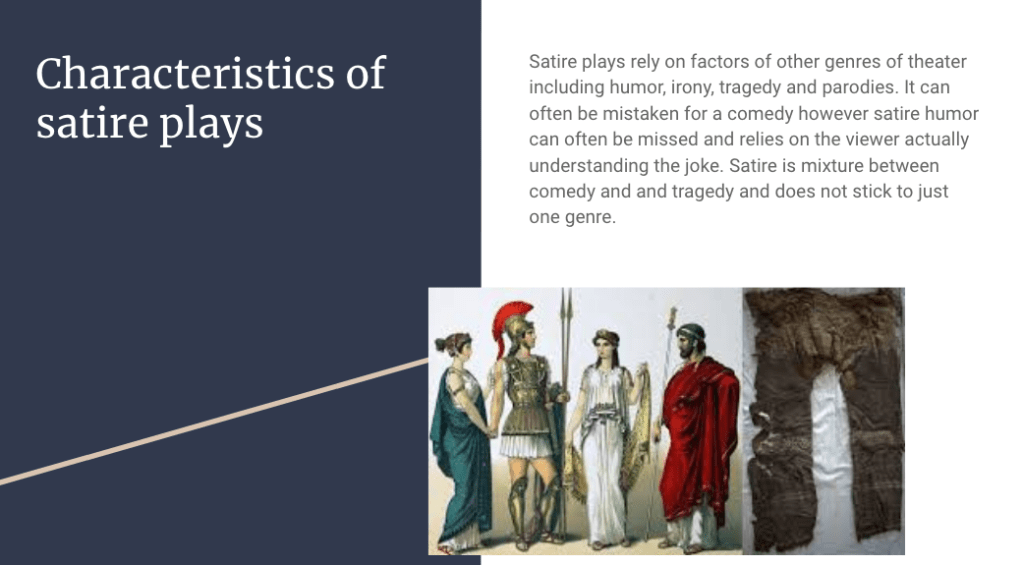
Group 3 – Satires
Slavin (1989) communicates that for collaborative learning to be effective, group goals must be established in addition to maintaining individual accountability. Upon reflection, I believe that within each group I could have allocated a point/question for each student to examine, ensuring all students attempted to engage in the construction of understanding. Ruggie (1998) asserts that educators must be cautious when students are involved in a group activity in order to ensure that each students’ opinions and criticism are not neglected. I believe that through implementing mixed-ability grouping and providing students the opportunity to co-construct presentations counteracted this as students practice communicating and advocating for their ideas, able to contribute to various parts of the presentation (Churchill et al., 2013). Whilst not all students were actively engaged, such learning experience provided students with the chance to ‘practice’ developing such skills prior to engaging in drama activities/games or performances throughout the unit. Within Bloom’s Taxonomy students are beckoned to shift from remembering and understanding to applying, analysing, evaluating and creating as this prompts higher order and critical thinking (Forehand, 2010). This is therefore achieved through collaboration as students are beckoned to work together, involving themselves in inquiry-based learning in order to effectively respond to the learning intention.
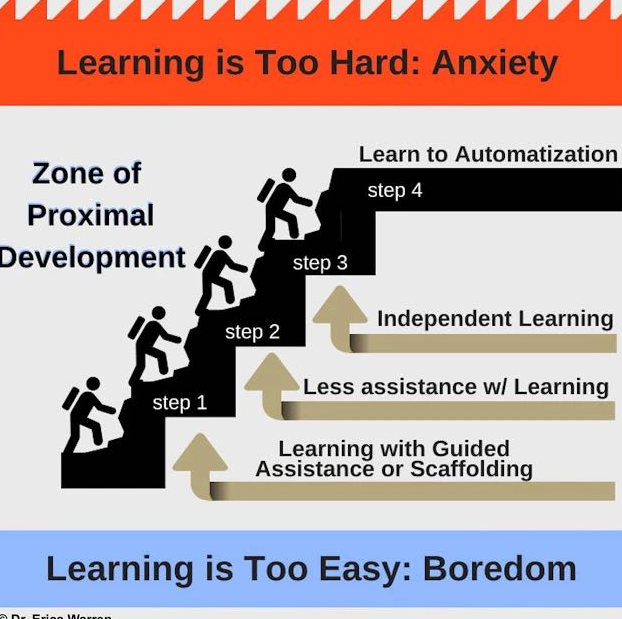
Ultimately, I believe that the collaborative learning teaching strategy I implemented helped pave the way for students to strengthen their interpersonal and intrapersonal skills. Moreover, it assisted students with recognising themselves as active learners, able to be involved in student-centred learning, prompting movement within the zone of proximal development (Vygotsky, 1978). Through reflection upon the activity, I can cater collaborative learning experiences to suit each class that I may teach depending on learning levels and the need for differentiation, ultimately understanding the context of learners in my classroom and scaffolding practices accordingly (AITSL, 2017, 1.2).
Churchill, S., Godinho, S., Johnson, N. F.; Keddie, A., Letts, W.; Lowe, K.; Mackay, J.; McGill, M.; Moss, J.; Nagel, M.; Shaw, K.; Vick, M. (2013). Teaching: Making a difference (3rd ed.). John Wiley & Sons.
Mintrop, H. (2004). Fostering constructivist communities of learners in the amalgamated multi‐discipline of social studies. Journal of Curriculum Studies, 36(2), 141-158. https://doi.org/10.1080/0022027032000142500
Ruggie, J. G. (1998). What makes the world hang together? Neo-utilitarianism and the social constructivist challenge. International Organization, 52(4), 855-885. https://doi.org/10.1162/002081898550770
Sizer, TR (2004), The red pencil: Convictions from experience in education. Yale University Press, New Haven.
Slavin, R.E. (1989): Research on cooperative learning: An international perspective. Scandinavian Journal of Educational Research 33: 231–243. : https://doi.org/10.1080/0031383890330401
Educators maintain duty of care within educational contexts, that is, to ensure that the learning environment is safe, supportive and fosters all students development (NSW Department of Education, 2021). I strive to ensure I maintain duty of care whilst on placement, especially as students learn through practical involvement, in order to promote student engagement and access to meaningful learning that is not hindered by disruptiveness, recklessness and the inability to provide a ‘safe space’ (AITSL, 2017, 1.6, 3.3, 3.5, 4.1, 4.2, 4.3 and 4.4).
INCIDENT
I introduced the topic of ‘drama’ to my Year 9 English class through a warm-up game of charades prior to delving into in-depth study. Students remained in their table groups (groups of 4) and were each handed a scenario to act out to the peers in their group. I instructed them to act out each scenario SILENTLY, using only their facial expressions and hand gestures. However some students did not adhere to these instructions as they moved to different groups, used inappropriate language at times and were not respecting their peers.
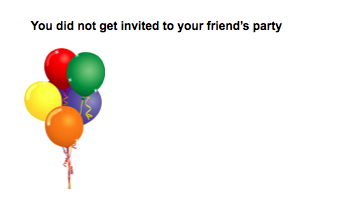
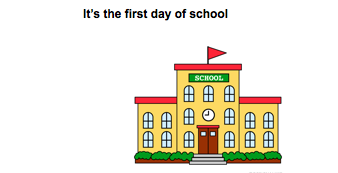
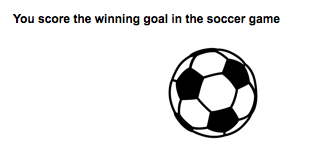
Charades cards given to students for the ‘warm up’ task
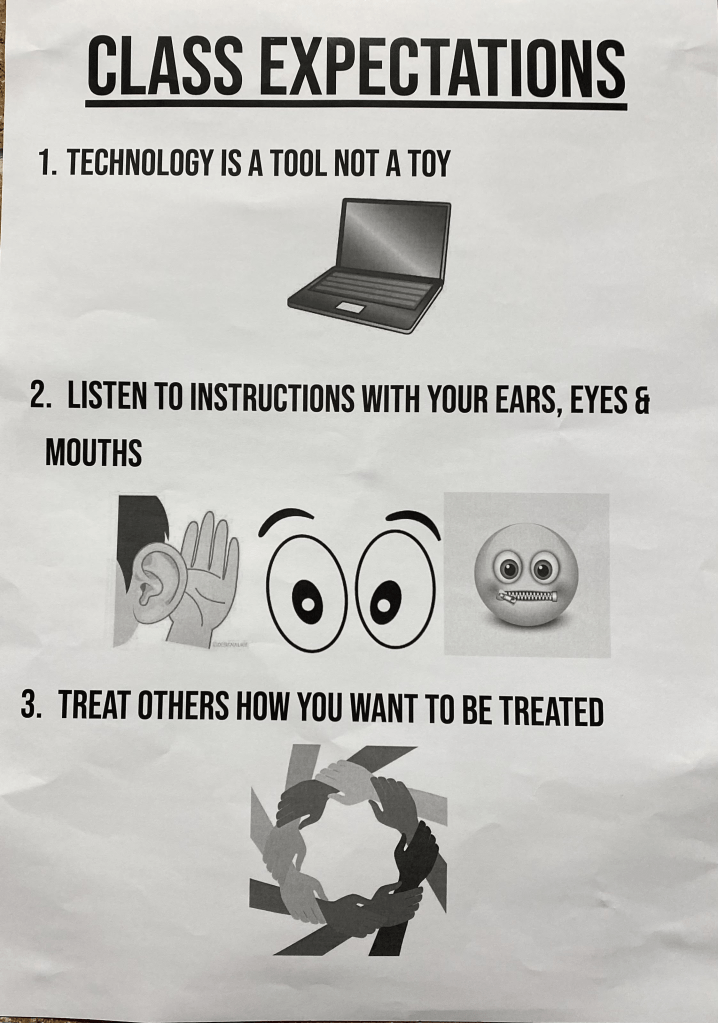
Prior to commencing the activity, I provided clear instructions concerning the intention of the warm-up, indicated that I would award demerits if students behaved inappropriately and developed three important classroom expectations that were required to be upheld by ALL students:
Technology is a tool, not a toy
Listen to instructions with your ears, eyes and mouths
Treat others how you want to be treated
Classroom expectations printed and placed around the classroom
It was crucial that I clarified classroom expectations 2 and 3 immensely prior to commencing this activity in order to minimise disruption and misbehaviour and ultimately promote a safe learning environment (AITSL, 2017, 4.2, 4.3, 4.4).
Although I established the requirements of student behaviour, such verbal explanation was not entirely effective. I was inclined to stop the activity and engage in discussion concerning the class expectations and students’ misbehaviour. This discussion was student-centred as I invited students to discuss how each expectation appears in practice i.e. What instruction did I give prior to beginning the activity? What does it mean to treat others how you want to be treated? The ‘Responsible Thinking Process’ underpinned my actions towards this incident as it fosters teaching students to think responsibly, be held accountable for their actions and understand how they can respect all individuals in the classroom including the educator and their peers (Ford, 1994). I believe this was an effective way to combat the situation as it ensured students understood that the classroom is a place for learning and such misbehaviour would not be tolerated. I maintain that I must continuously clarify expectations at the start of each lesson in order to maintain consistent practice. Whilst I had intended to address misbehaviour through awarding demerits, I gave three warnings instead and it was through critical reflection that I should have aligned my practice with the original intended consequence in order to maintain consistency in method. Such act aligns itself with the Behavioural Learning Theory, in particular, a form of operant conditioning posed by Skinner in order to reduce the likelihood of students misbehaving in the classroom in subsequent lessons (Skinner, 1938). Upon further reflection, I could have provided positive reinforcements i.e. merits in order to reward students/groups that listened to instructions, worked well and completed the activity in the shortest amount of time (Skinner, 1938). Such positive feedback assists in enhancing students self-esteem and helps develop a better student-teacher relationship (Churchill et al., 2013). Moreover, if students are to engage in collaborative tasks, allocating groups effectively i.e. pre-assigned, assigning each student a number or completion in pairs would assist in minimising disruption (Churchill et al., 2013). Building a rapport with students is critical as it can aid in sustaining a classroom that features order and discipline, building a positive teacher-student relationship (Canter, 2010). This also includes developing my ‘teacher voice’ in order to correct disruptive behaviour, establishing a degree of assertive discipline (Canter, 2010).
I believe these are aspects within my teaching practice that I can develop in order to effectively address challenging behaviour in the future and establish a safe, learning environment.
REFERENCES
Australian Institute for Teaching and School Leadership. (2017). Australian Professional Standards for Teachers. https://www.aitsl.edu.au/standards
Canter, L. (2010). Assertive discipline: Positive behavior management for today’s classroom. Bloomington: Solution Tree Press.
Churchill, S., Godinho, S., Johnson, N. F.; Keddie, A., Letts, W.; Lowe, K.; Mackay, J.; McGill, M.; Moss, J.; Nagel, M.; Shaw, K.; Vick, M. (2013). Teaching: Making a difference (3rd ed.). John Wiley & Sons.
Ford, E. E. (1994). Discipline for home and school: Teaching children to respect the rights of others through responsible thinking based on perceptual control theory. Brandt Publications.
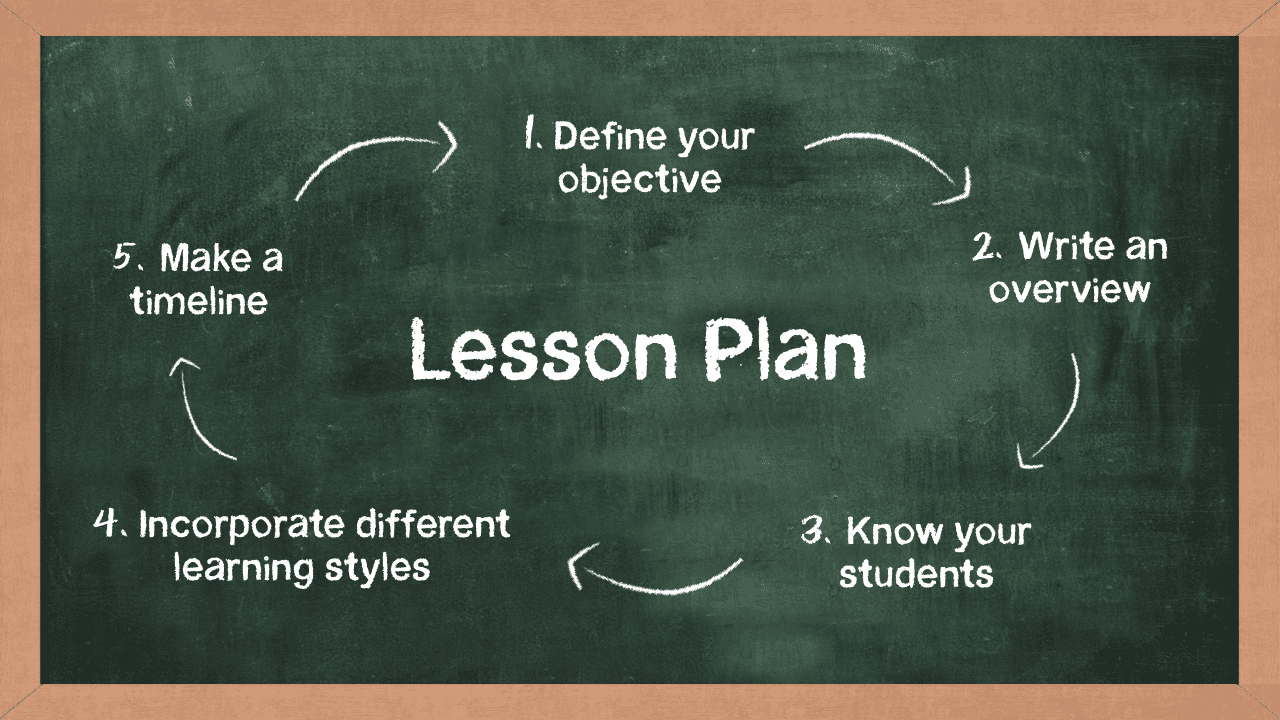
According to Cicek (2013), “A successful lesson plan establishes rules and procedures for how to begin, proceed and end the class, reinforcing a sense of structure and consistency and communicating that the classroom is a place for learning helps students know what to expect” (p. 336). A clear introduction, development and conclusion is critical in establishing and evaluating if learning objectives and success criteria have been met, aspects which form the basis of an effective lesson plan (Richards, 1998). Thus, learning experiences created and developed must be student-centred in order for education to be authentic and student growth to occur in the learning cycle (Dymoke & Harrison, 2008). With reference to a lesson (Year 7 English, Unit – ‘Stand and Deliver’) that I scaffolded and taught, the AITSL standards which instructed my approach to creating an effective lesson included 1.1, 1.2, 2.2, 2.3, 2.6, 3.1, 3.2, 3.3, 3.4, 3.5, 4.2 and 5.4 (2017). This ensured that I acknowledged the context of my class, set learning goals that were achievable, implemented a range of teaching strategies and assessed students’ learning in order to scaffold effective lessons in the future (AITSL, 2017).
Teachings in Education. (2018, January 25). Lesson Planning: What is Required? [Video]. YouTube. https://youtu.be/XPpW9UVb_90
I believe that my introduction was highly effective as I set short and clear learning objectives; clarifying classroom expectations and ascertaining students’ pre-existing knowledge. Students were provided with clarity concerning the aim of the lesson and the notion of the classroom being a place for learning was reinforced, necessary for students to engage effectively in the ‘development’ of the lesson (Cicek, 2013). It was only through delivering the lesson that I was able to appreciate the essence of learning as a nonlinear process, influenced by internal and external factors, rather than a destination (Trumbull & Lash, 2013). Whilst a clear, structured and consistent lesson plan is crucial, it is not necessarily ‘realistic’ to accomplish all goals outlined in theory. Attempting to include a vast amount of activities in a mixed-ability environment affected my ability to control the timing of activities (Butt, 2008, Churchill et al., 2013). Thus, within the ‘development’, all learning objectives and success criteria were not achieved as intended. This included the completion of a glossary of key terminology, viewing/note-taking/discussion concerning the power of ‘emotions’ in drama, engagement in a charades activity and completion of a reflection. Thus, the assessment ‘for learning’ (NESA, 2021), indicated within learning objectives, was altered in order to suit the pace of learners’ in the classroom. Through adjusting the lesson, I was able to maintain focus upon the class discussion as this assisted in consolidating student understanding, developing students deep-thinking skills and would enable students to engage meaningfully in the subsequent activities (Harden, 2007) I believe it was necessary not to proceed with activities with the intention of completion but rather focus upon the quality of active understanding (Brookhart, 2010).
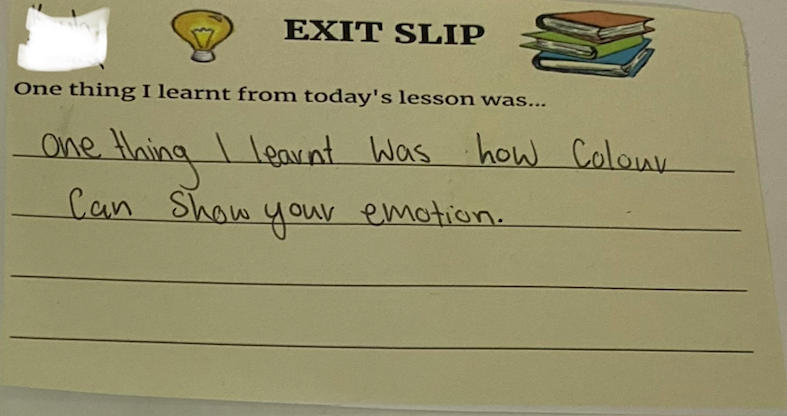
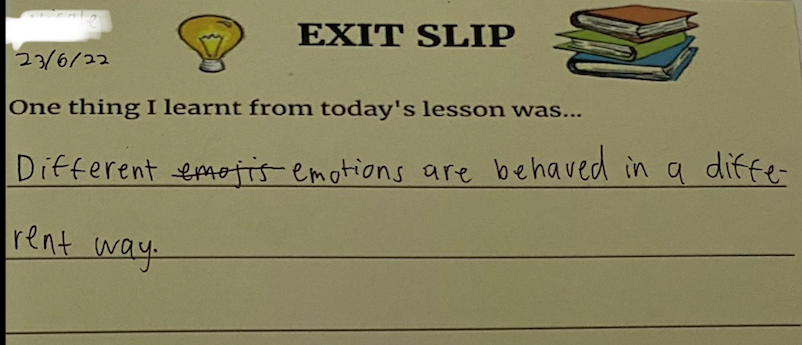
Despite being unable to complete two learning objectives, I maintain that the ‘conclusion’ of a lesson is of paramount importance. It enables the evaluation of teaching and learning practices to occur and expectations concerning the follow-up lesson to be verbalised, reinforcing clarity and consistency (Cicek, 2013). I prompted students to complete the exit slip, enabling them to digest and contemplate what had been discussed in the classroom (Leigh, 2012). This encouraged students to process new information, engage in self-reflection and develop intrapersonal skills (Leigh, 2012). As Butt (2008) stipulates, focusing on the ‘conclusion’ of a lesson develops a “circular relationship that helps to ensure good teaching and learning” (p.3). Thus, I was able to review responses in order to ascertain students’ current understanding, mould my teaching practices to suit the context of my class and ultimately engage in professional development (Churchill et al., 2013).
Students Exit Slips completed during the ‘conclusion’ of the lesson.
Bennet & Rolheiser (2001) reinforce that “action without reflection and reflection without action are both unacceptable stances in education” (p.4). Through critical reflection upon my lesson plan, I recognised that I must continuously develop my rapport with students in order to understand the pace at which they learn and utilise the ‘conclusion’ to gauge the effectiveness of my teaching method.
REFERENCES
Australian Institute for Teaching and School Leadership. (2017). Australian Professional Standards for Teachers. https://www.aitsl.edu.au/standards
Bennett, B., & Rolheiser, C. (2001). An explanation of mind mapping. Beyond monet: the artful science of ınstructional ıntegration. Toronto: Bookation
Brookhart, S. M. (2010). How to assess higher-order thinking skills in your classroom. ASCD.
Butt, G. (2008). Lesson planning 3rd edition. Bloomsbury Publishing.
Churchill, S., Godinho, S., Johnson, N. F.; Keddie, A., Letts, W.; Lowe, K.; Mackay, J.; McGill, M.; Moss, J.; Nagel, M.; Shaw, K.; Vick, M. (2013). Teaching: Making a difference (3rd ed.). John Wiley & Sons.
Leigh, S. R. (2012). The Classroom Is Alive with the Sound of Thinking: The Power of the Exit Slip. International Journal of Teaching and Learning in Higher Education, 24(2), 189-196. https://eric.ed.gov/?id=EJ996265
As a pre-service teacher and future educator, my teaching philosophy is underpinned by the central notion that all students are entitled to rich, meaningful learning experiences that fosters their full development (Universal Declaration of Human Rights [UDHR], 1948). I believe that this occurs through upholding a ‘safe space’, characterised by acceptance and tolerance and moreover taking into consideration the multifaceted nature of students’ experiences (Australian Institute for Teaching and School Leadership [AITSL], 2017). Students must be assistedwith their academic pursuits and social-emotional development through the construction of a strong rapport and positioning the educator as a ‘guide’ rather than a figure whose presence dominates the learning environment (AITSL, 2017 1.1, 1.2, 1.3, 1.4). I believe that adopting a primarily constructivist, humanist and social learning theory approach in the classroom can assist with providing such rich learning experiences to all students. Thus, my teaching ethos has been influenced through my direct involvement in education as both a student and educator, enabling me to understand the obligations of both parties involved in learning.
Constructivist conceptions, with particular reference to Vygotsky (1962), have influenced my understanding of how students learn. As Bada & Olusegun (2015) state, “teachers cannot simply transmit knowledge to students, but students need to actively construct knowledge in their own minds” (p.66). This is reiterated by Churchill et al., (2013) who convey that “the term ‘learner’ in itself implies a degree of agency in the learning process” (p.215). It is integral that the classroom is student-centred, allowing learners to take responsibility for the ‘construction’ of knowledge and skills in order to process new information, understand the world around them and their place within it. It is imperative that I integrate think-pair-share activities, class discussions, debates, inquiry tasks and jig-saw group work in order to accomplish this. Moreover, engagement in such activities aids in developing students’ intrapersonal skills as they are prompted to communicate with peers from diverse backgrounds, exposing them to ‘real world’ practices (Bada & Olusegun, 2015). The framing of the educator as an ‘assistor’ enables students to develop their critical and creative thinking through active experience within the zone of proximal development (Vygotsky, 1978). Learning should not be stagnant and therefore students must be continuously challenged, within reason, in order to prompt movement within the zone of proximal development and maintain engagement (Churchill et al., 2013). Social Learning theory emphasises that the educator plays a vital role in providing effective modelling, practice and opportunities for students to develop their self-efficacy (Bandura, 1976). Through perceiving myself as a ‘facilitator’ of learning, I am able to frame students as active agents in the classroom, involved in constructing their own understanding. However, I also believe that access to assistance is crucial in order for students to strengthen their self-efficacy and reach their full potential. Providing examples of work, demonstrations and prompts/guiding questions can help in providing clarity, assisting students in their attempt to understand key concepts without negating their development within the zone of proximal development (Wood et al., 1976).
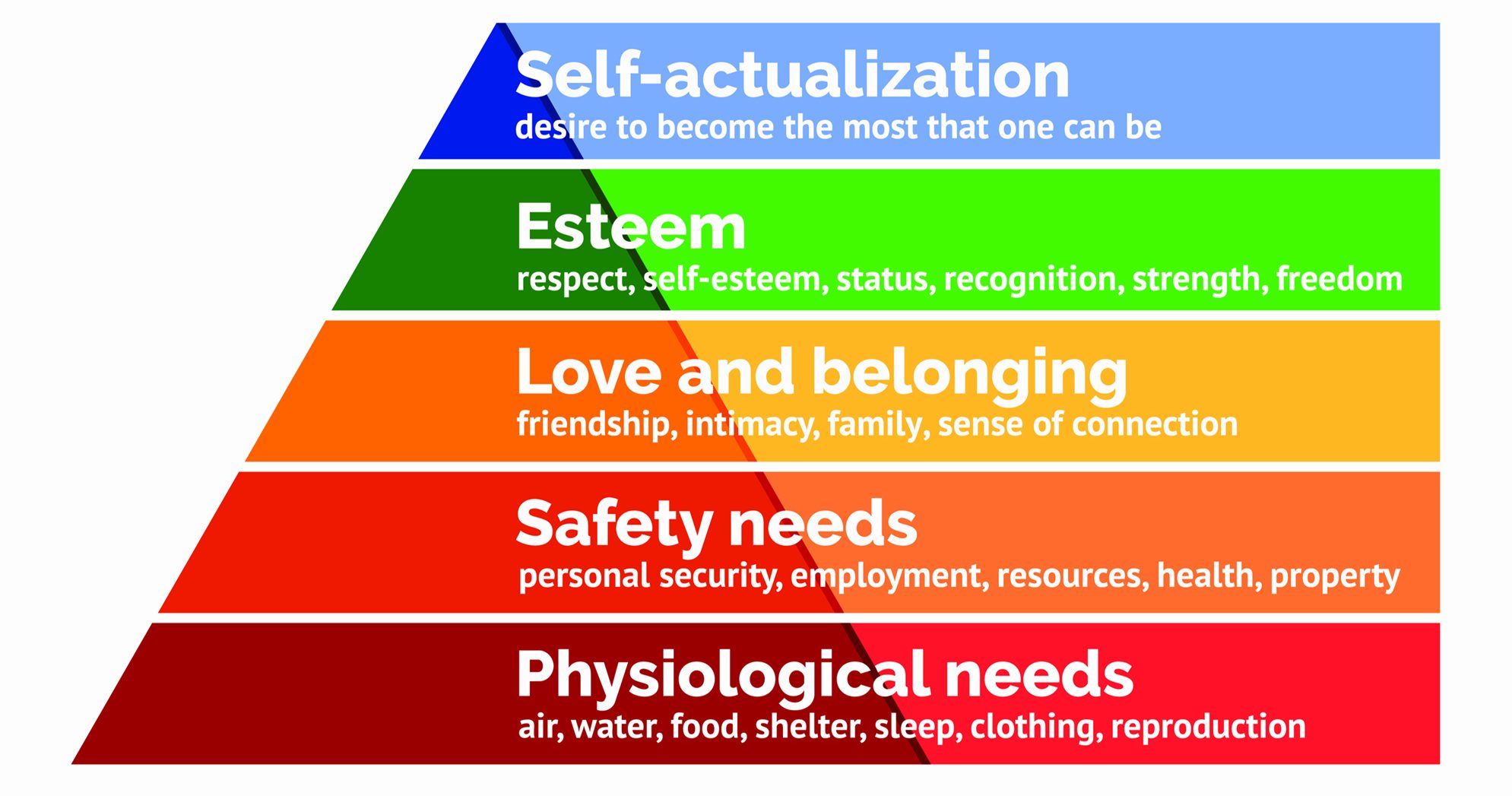
All students are unique and I must take this into consideration as I structure and deliver lessons (AITSL, 2017, 1.3). I believe in adopting a Universal Design for Learning approach in order to develop my student-teacher rapport, cater for students’ interests and differentiate for diverse learners (Craig et al., 2022, AITSL, 2017, 1.1, 1.2, 1.3, 1.4, 1.5 and 1.6). Ultimately, a learner-centred classroom is of paramount importance, enabling students to recognise their capabilities as critical and creative individuals, reaching a point of ‘self-actualisation’ (Crain, 2015). Influenced by humanist theoretical concepts, this aspect is reinforced within my teaching ethos. Maintaining an inclusive, engaging classroom environment is held in high regard in order to ensure students’ physical, psychological, social-emotional and academic needs are not neglected (Maslow, 1943). I believe that providing variance in class work, offering students time to self-reflect, engage in collaboration and receive positive feedback/reinforcements are crucial steps I can take in order to develop my rapport with students and increase their desire to engage in learning. Maslow (1970) attests that “there are no perfect human beings” (p. 176) and therefore ‘self-actualisation’ does not inherently perceive students becoming ‘perfect’ but rather recognising themselves as strong, capable individuals with drive and purpose. Thus, it is my responsibility to ensure that all students are provided with opportunities to strengthen their self-efficacy, as indicated within Maslow’s Hierarchy of Needs (Maslow, 1943).
As stipulated by AITSL (2017), “teachers share a significant responsibility in preparing young people to lead successful and productive lives” (p.2). My teaching philosophy involves sharing my passion for learning with students whilst maintaining that I am a ‘facilitator’, providing opportunities for students to develop lifelong skills that are utilised beyond the classroom context. I must continue to be a reflective educator in a continuously evolving profession, listening to feedback, applying it and engaging in professional development, ensuring that I do not remain stagnant in my practices and attitude.
REFERENCES
Australian Institute for Teaching and School Leadership. (2017). Australian Professional Standards for Teachers. https://www.aitsl.edu.au/standards
Bada, S. O., & Olusegun, S. (2015). Constructivism learning theory: A paradigm for teaching and learning. Journal of Research & Method in Education, 5(6), 66-70. DOI: 10.9790/7388-05616670
My name is Holly Ibrahim and my teaching journey has been filled with insightful experiences, ‘opening my eyes’ to appreciate the multifaceted nature of education and the learners involved. I am at the end of my third year of study, enrolled in a Bachelor of Teaching/Bachelor of Arts (Humanities) at Australian Catholic University, hoping to graduate with a double major in History and English. I graduated from an all-girls Catholic High School at the end of 2018, a school in a low/middle-socio economic environment, which provided me with the opportunity to interact with peers from various cultures, faiths and learning levels. This has instilled in me the capacity to appreciate and work with ALL members of the community, acknowledging how various internal and external factors can influence students’ learning, behaviour and development (AITSL, 2017, 1.1, 1.2, 1.3). Through the completion of professional experience within my degree, whether I was teaching at an all-girls public or co-educational catholic high school, I was able to gain and develop valuable interpersonal and intrapersonal skills. Such experiences enabled me to understand myself as an educator and those around me, prompting me to recognise the evolving nature of human experiences and my responsibility to facilitate rich, meaningful learning. Teaching is embedded within various aspects of my weekly routine. I tutor privately, in a centre and am involved in volunteer work whereby I teach Sunday school to primary/high school aged individuals. Such experiences have enabled me to develop a rapport with learners, prepare/deliver lessons, cater for students’ diverse needs and reflect upon my methods in order to provide optimal learning experiences. Moreover, working in such educational contexts and retail has enabled me to strengthen my ability to communicate effectively and ultimately transfer these skills into the classroom context. I am about to embark on my final year of study in the hopes of becoming a High School educator. I endeavour to utilise my experiences and skills within the teaching profession in order to assist learners to strive to reach their full potential.
REFERENCE
Australian Institute for Teaching and School Leadership. (2017). Australian Professional Standards for Teachers. https://www.aitsl.edu.au/standards














 Holly’s Blog