ANXIETY IN THE ‘GROUP, COLLABORATIVE AND COOPERATIVE’ LEARNING SPACE

A. Introduction i. a section detailing your initial identification, investigation and justification of your chosen learning space, with a focus on the particular student cohort and educational need Anxiety is characterised by “persistent, excessive fear or worry in situations that are not threatening” (The National Alliance on Mental Illness, 2017). It can lead to increased …

ARTICLE 5 – GROUP, COLLABORATIVE AND COOPERATIVE LEARNING SPACES

Within interactive learning spaces, students are granted opportunities to ‘grapple’ with content as a ‘community of learners’, developing valuable intrapersonal and interpersonal skills (Smith, 2003, Johnson et al., 1994). It is insufficient for educators to simply “transmit knowledge” (Bada & Olusegun, 2015, p.66) as students must be encouraged to develop social/cognitive skills through interaction. I …

ARTICLE 4 – THE LIMINAL LEARNING SPACE

“Real learning requires stepping into the unknown, which initiates a rupture in knowing” (Schwartzman, 2010, p.38) This ‘rupture’ underpins the ‘liminal’ learning space. Learners are beckoned to accept that they are within the unknown and untether themselves from prior understandings. In order for change to be ‘transformative’ and ‘progressive’, learners experience a “deep, structural shift …

ARTICLE 3 – THE ONLINE LEARNING SPACE

Considering the “ubiquity and pervasiveness of digital technologies within contemporary society” (Framroze, 2017, p.2), it is no surprise that it is used as a tool within the realm of education to assist and enhance learning.  It can act as a catalyst, promoting excitement and limiting disengagement through providing variation from the traditional ‘pen and paper’ …

ARTICLE 2 – THE PERSONAL LEARNING SPACE

Learning is a lifelong process, intrinsically connected to all human practices and therefore “when we fail to take control of our education, we fail to take control of our lives” (Hayes, 1998, p.14).  Churchill et al. (2013) associate the term ‘learner’ with notions of ‘agency’ and ‘autonomy’, positioning learning as a student-centred ‘activity’. Within the …

HURDLE REFLECTION 4

USING DATA TO INFORM TEACHING Data refers to collecting information concerning students’ engagement in learning activities in order to assess student knowledge/skills and inform future teaching practices. It can be retrieved from a plethora of sources in order to understand each student’s position in the learning cycle and identify a focus for the educators’ professional …

HURDLE REFLECTION 3

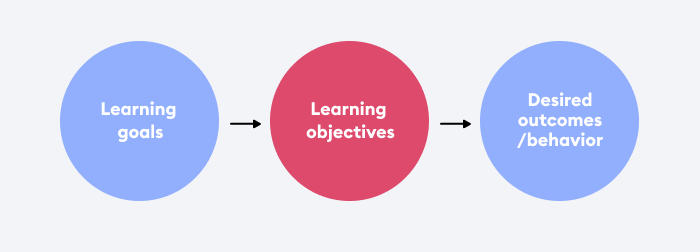
EXPLICIT LEARNING GOALS Clear learning goals provide clarity concerning lesson expectations, thereby ‘demystifying’ education (Cabaniss, 2008). Thus, providing clear, achievable goals are of paramount importance and is characterised by utilising explicit instructions, providing demonstrations to a class through tactile approaches, linking lessons to prior knowledge i.e. asking questions to acknowledge what students completed in the …

HURDLE REFLECTION 2

ASSESSMENT Assessment is multifaceted, able to assess student understanding regarding content examined, the development of critical skills and interpret student data to understand the trajectory of learning and how this can be altered to cater for learners. (Harlen, 2006). Diagnostic assessment ‘as’ and ‘for’ learning determines students’ pre-existing understanding or level of knowledge and thereby …

HURDLE REFLECTION 1

DEEP QUESTIONING AND ENGAGEMENT Surface learning is characterised by learners’ meeting minimum learning requirements through engaging in practice with minimal effort. This therefore disregards analysis and integration, leading to lack of engagement with learning outcomes. Contrastingly, deep approaches enable students to understand content, actively integrate new information in their learning, develop analytical skills, and are …

CRITICAL REFLECTION 1

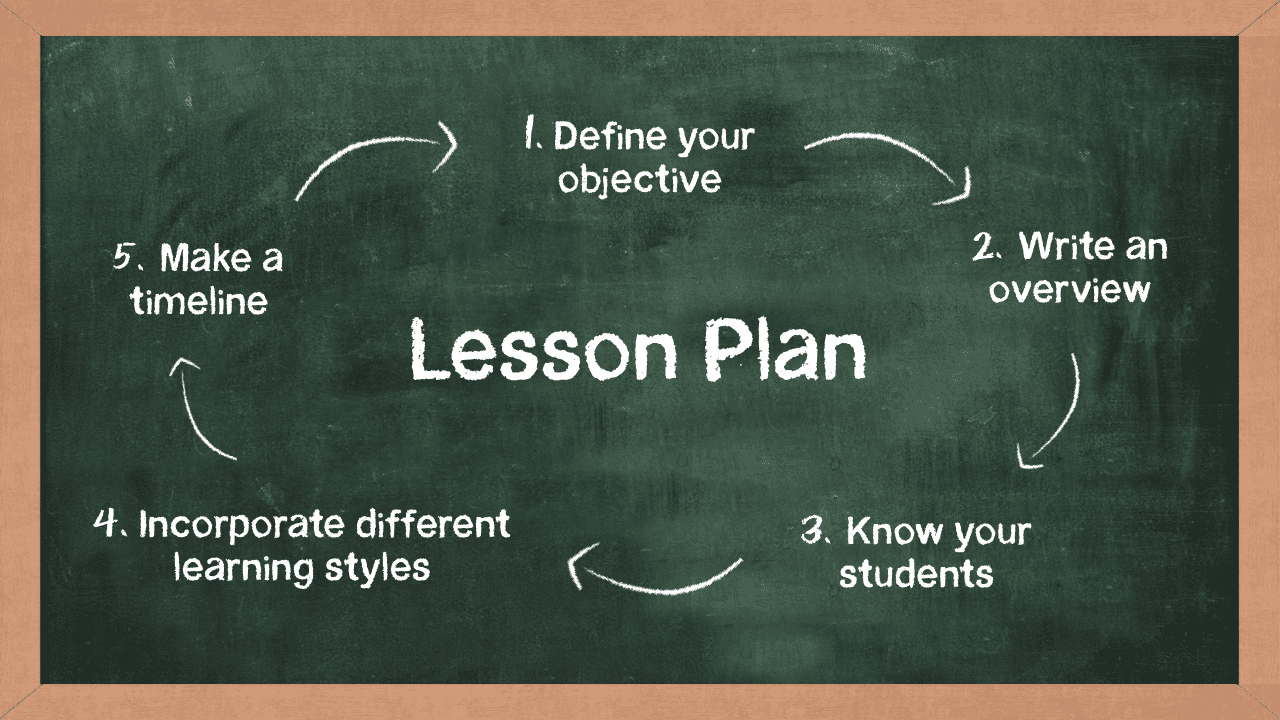
PLANNING FOR TEACHING AND LEARNING According to Cicek (2013), “A successful lesson plan establishes rules and procedures for how to begin, proceed and end the class, reinforcing a sense of structure and consistency and communicating that the classroom is a place for learning helps students know what to expect” (p. 336). A clear introduction, development …

Design a site like this with WordPress.com
Get started